


Bathroom Floor Tile Trends 2026Australian Edition: What's Leading the Market in Format, Tone & Texture
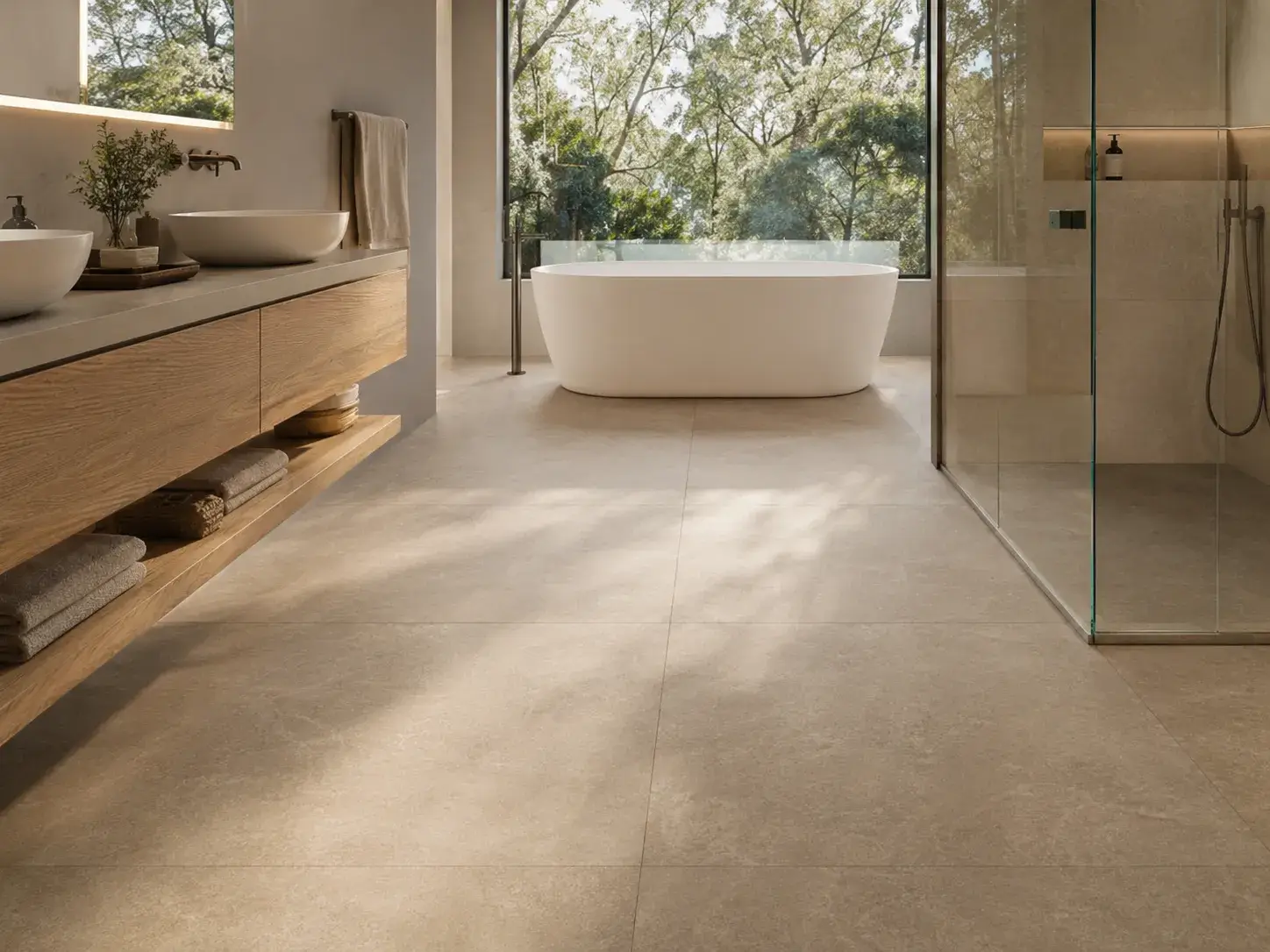
The top bathroom floor tile trends for 2026 in Australia are: large-format porcelain in 600×600 and 600×1200, earthy warm tones replacing cool greys, textured stone-look and concrete-effect finishes, and integrated floor-to-wall continuity using the same tile format. All must comply with AS 4586 P3 minimum for bathroom floors and P4 for shower floors under the NCC.
Australian bathroom design in 2026 is responding to a clear direction: warmth, texture, and material continuity. The clinical white-and-grey bathrooms of the 2010s are being replaced by spaces that feel more grounded, organic, and considered. These shifts are visible in the tile specifications coming through DW Tiles' trade accounts from builders, designers, and renovators.
Here is what is trending, with practical data on formats, finishes, and compliance. For the technical requirements behind every specification, see which tile is best for a bathroom floor.
Large Format
Takes Over
The shift to large-format bathroom floor tiles continues to accelerate. In 2026, 600×600 is now the baseline residential format, not the premium option. 600×1200 is gaining share in master bathrooms and ensuites. The reasons:
- AFewer grout lines create a more seamless visual plane
- BLarge format makes smaller bathrooms appear larger, the optical illusion of fewer joints opens up the space
- CInstallation technology (levelling clip systems, flexible adhesives) has made large-format floor tiling more accessible
The trade-off: large format requires a level substrate and screeded falls to waste, you cannot compensate for gradient by shimming individual tiles. This is a buildability issue that affects specification in timber-framed construction, and a frequent cause of failed bathroom floor installs.
DW Tiles 2026 Recommendation
Santa Monica 600×1200 in matt finish, P3 rated, earthy warm tone, available through our Sydney, Melbourne and Brisbane branches. Also see the full bathroom floor tile range.
Earthy Warm Tones
Replace Cool Greys
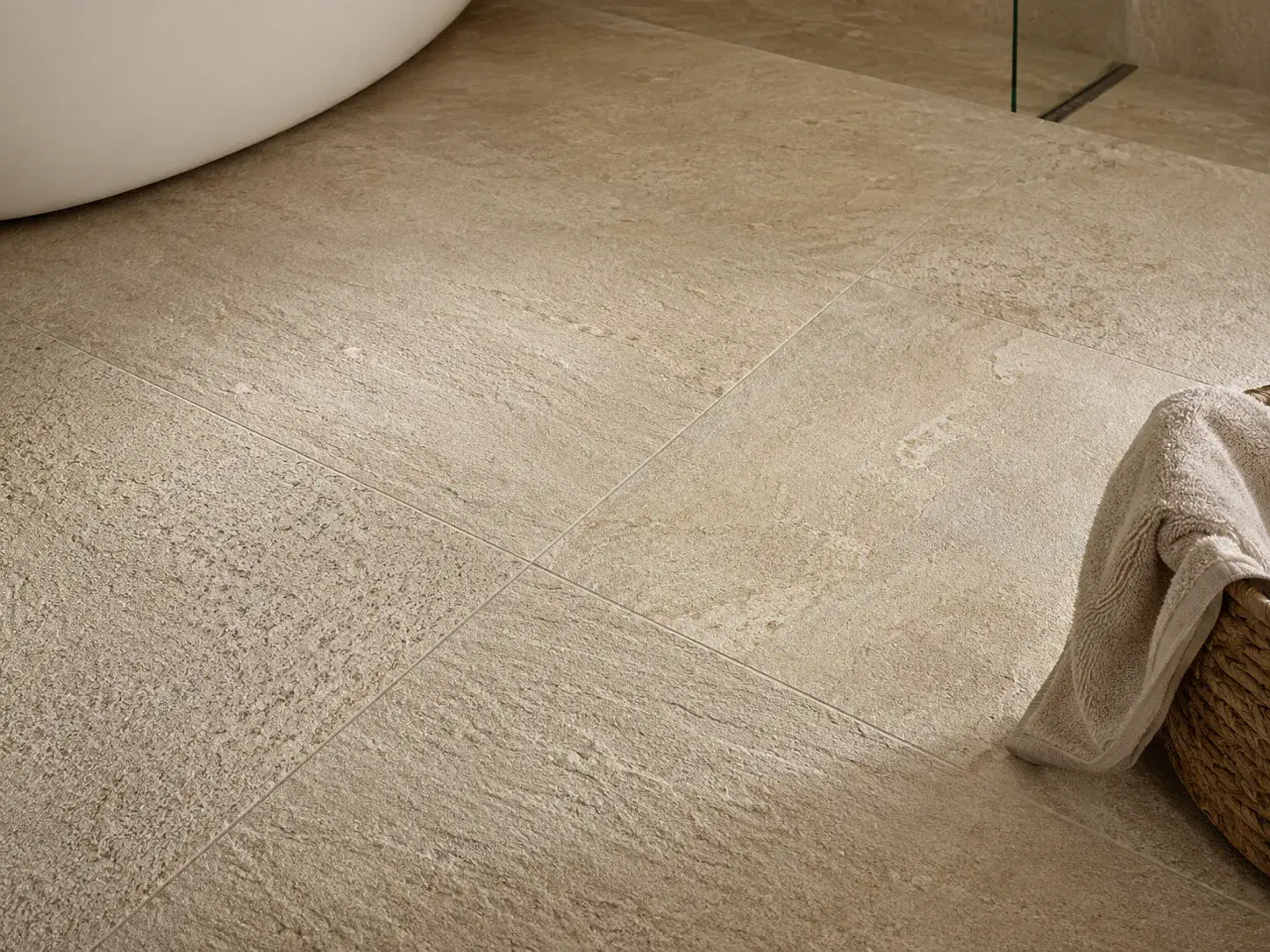
The cooler palette of the early 2020s, stone grey, pale charcoal, cool white, is giving way to warmer, earthier tones. Sand, terracotta, warm beige, and travertine-effect finishes are appearing in bathroom specifications across all price points.
This reflects a broader interior trend toward biophilic design, the integration of natural, organic aesthetics into built environments. Bathrooms feel less clinical with warm tones, and research in residential design confirms that buyers increasingly associate warmth with quality and luxury.
Textured &
Stone-Look Surfaces
Smooth, flat tile surfaces are being supplemented (and in some segments, replaced) by textured finishes that reference natural materials. The two leading variants:
Stone-Look Porcelain
Porcelain tiles that mimic limestone, travertine, and rough-cut sandstone, including faithful surface texture as well as visual pattern. These tiles achieve two goals: the organic warmth of natural stone without its maintenance demands, and grip-textured surfaces that easily achieve P3 and P4 ratings.
Concrete-Effect Porcelain
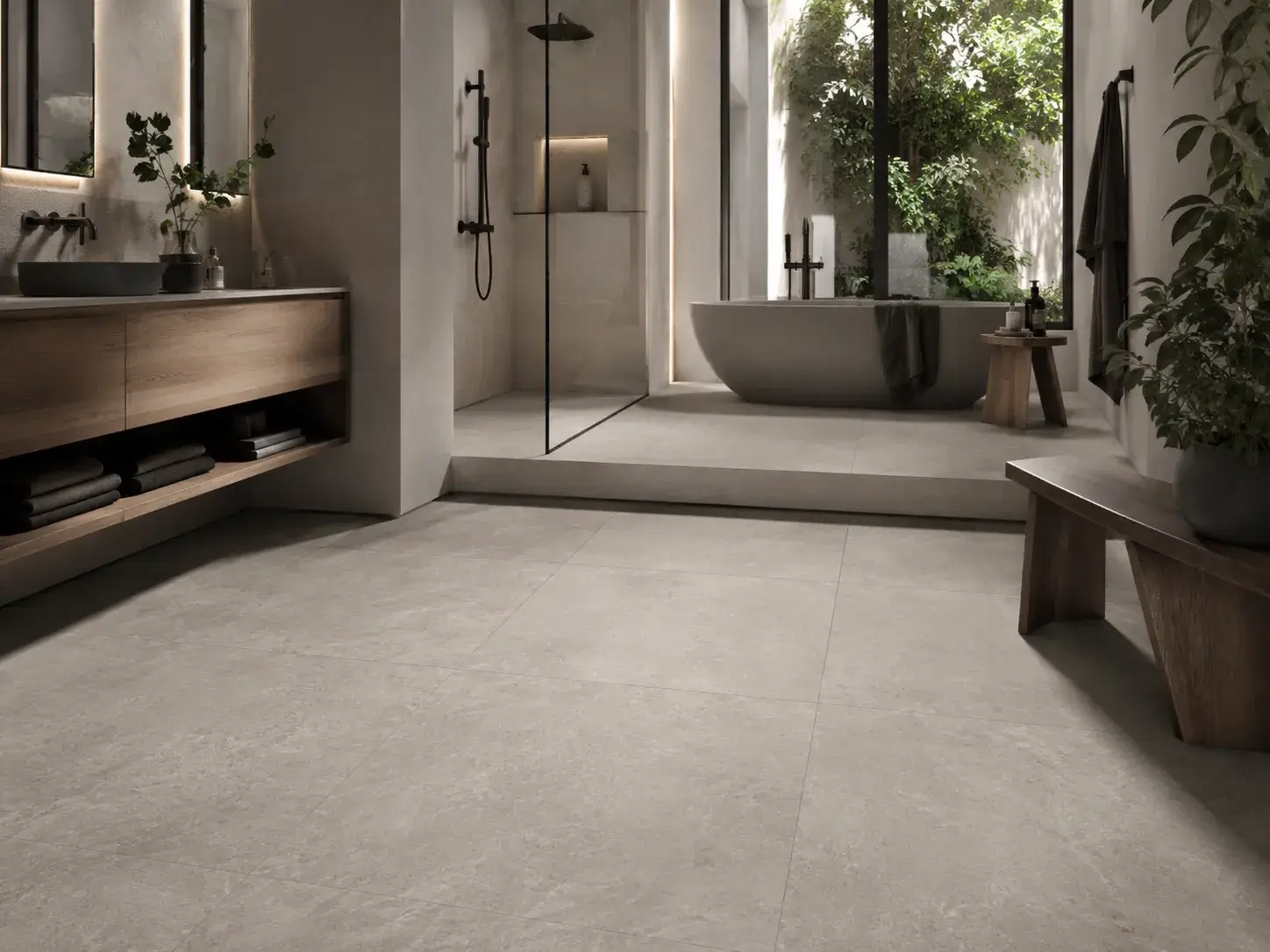
The concrete-look trend that began in commercial design has moved firmly into residential bathrooms. Warm-toned concrete effects (moving away from cold industrial grey) are popular in contemporary and minimalist bathrooms. NYRA from DW Tiles represents this category in the 2026 range, alongside the wider stone-look and concrete-look collections.
Floor-To-Wall
Continuity
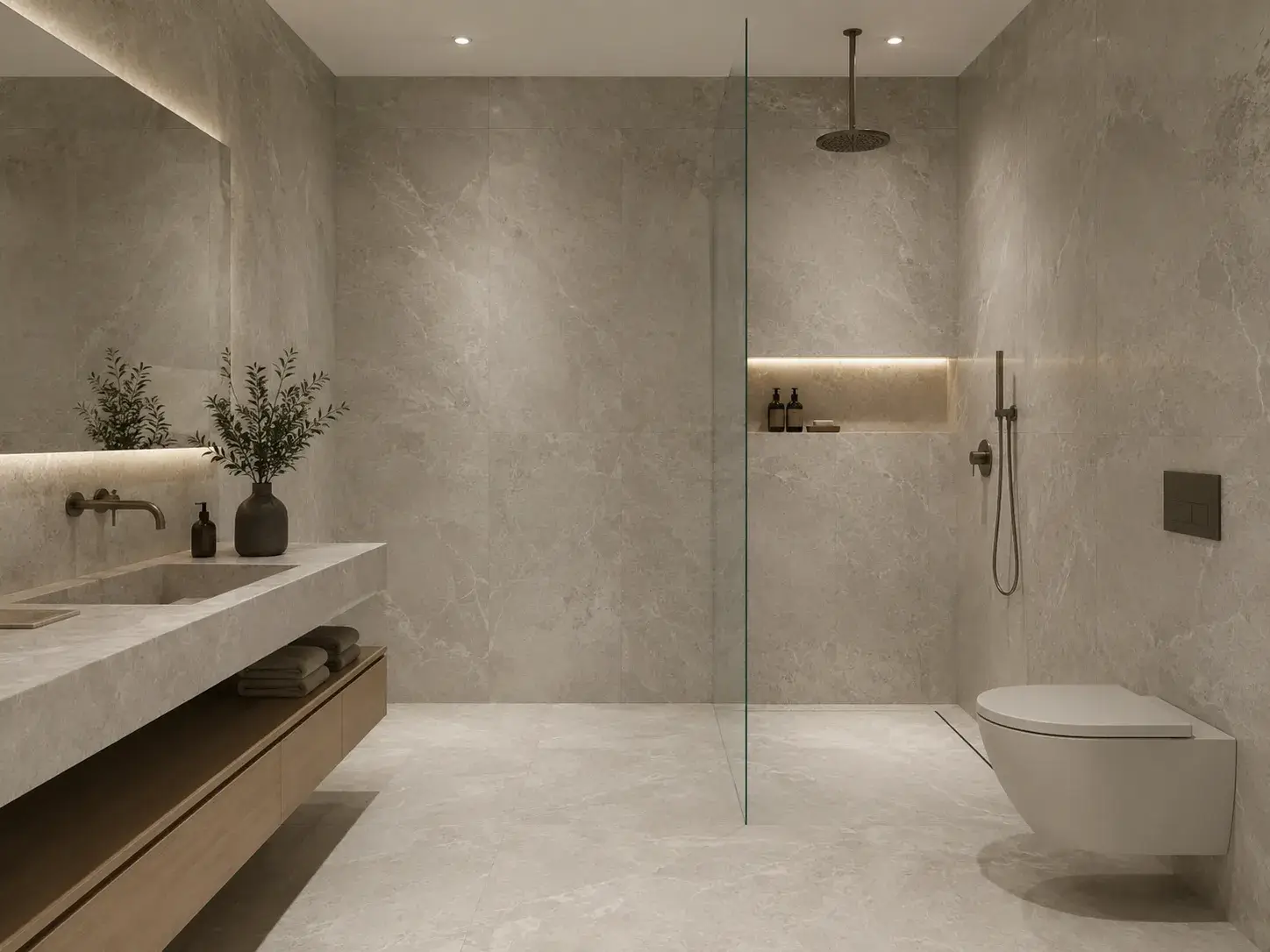
More bathroom specifications in 2026 are using the same tile (or the same format in different finishes) on both the floor and walls. This creates a seamless, cave-like aesthetic that feels cohesive and luxurious, and simplifies tile ordering for contractors.
The technical implication: the floor version must have a P3+ slip rating, and the wall version of the same tile may have a polished or gloss finish (no slip rating required for walls). DW Tiles supplies both floor and wall versions of several collections, including Calacatta Warm, to enable this approach.
2026 Trend
Summary
A quick reference to the five trends, the formats they typically use, and the compliance points to check.
| Trend | Typical Format | Compliance Notes |
|---|---|---|
| Large-format (600×600+) | 600×1200 | Requires screeded gradient base |
| Warm / earthy tones | 600×600 | Check P-rating, warm matt usually P3+ |
| Textured stone-look | 600×1200 | Textured finishes typically P3 to P4 |
| Floor-to-wall continuity | Same collection floor/wall | Confirm P-rating on floor version |
| Mosaic shower floors | 300×300 sheet | P4 standard, suits shower compliance |
What Not To
Specify In 2026
- APolished porcelain on bathroom floors: compliance risk (P1 to P2 only) and shows water marks
- BCool blue-grey tones: market saturation, hard to differentiate in property sales
- CGrout-heavy small mosaic on large bathroom floors: the visual complexity reads as dated in contemporary bathrooms
- DCeramic on wet area floors: fails NCC compliance, absorption too high
Browse The 2026
Bathroom Floor Range
View Santa Monica, NYRA, Calacatta Warm and more at wholesale trade pricing. Open a trade account or contact your nearest DW Tiles branch in Sydney, Melbourne or Brisbane.
- Standards Australia, AS 4586:2013 Slip resistance classification of new pedestrian surface materials
- National Construction Code (NCC) 2022, Section F, Wet Areas
- Standards Australia, AS 3740:2021 Waterproofing of domestic wet areas
- Houzz Australia Bathroom Trends Report 2026, design preference data